

AI
10 Aug 2026

Today, information is everywhere in the company. Employees read articles, track their competitors, interact with customers, participate in trade shows and conferences. Without really thinking about it, everyone is already monitoring. The problem is that this information often remains scattered: in emails, personal files, notes taken on the fly… or simply in people’s heads.
Result: time is wasted searching for information that already exists, and certain opportunities or threats go unnoticed. Collaborative monitoring helps to bring orders to this chaos. It helps to transform this mass of information into shared knowledge, useful and directly exploitable for decision-making.
With the internet and digital tools, accessing information has never been easier. But simply having access to information is no longer enough. The real value lies in the ability to share, analyze and exploit this information collectively. Without clear organization, monitoring quickly becomes counterproductive: the same searches are carried out several times, information is not cross-referenced, and there is no overall view. Collaborative monitoring addresses this problem by creating a common framework. Information is centralized, qualified and disseminated to the right people at the right time via a structured monitoring software such as Cikisi.
Collaborative monitoring cannot be implemented overnight. It is a gradual process based on a few essential steps.
It all starts with a preparation phase. This involves understanding how information already flows within the company, what the decision-makers’ needs are, and which topics are truly strategic. This step also allows you to identify internal relays and clarify the objectives of the monitoring. Effective monitoring must always serve the decision-making process. This step should be combined with a follow-up interview 6 to 12 months later in the project to check whether the objectives are still the same and whether there have been any changes.
Once the system is in place, the challenge is to make people want to use it. Automatic alerts, targeted newsletters, discussion time… the first users begin to consult the monitoring results. A bit at a time, field teams also contribute: customer feedback, market observations, weak signals spotted at events. Monitoring then becomes truly collaborative.
Effective monitoring evolves over time. Users feedback help refine filters, categories and dashboards. The more structured and personalized the information is, the easier it is to use. The goal is simple: as quickly as possible what is truly useful for professionals and informed decision-making.
To have a real impact, monitoring must not remain separate from the information system. It must be integrated into the tools already in use, whether CRM or ERP software, intranets, corporate messaging systems, digital workplaces, or other specific business tools. Business intelligence then enriches existing data and supports decisions relating to sales, purchasing, innovation, and partnerships. A lack of interoperability weakens monitoring systems by creating information silos and breaks in the value chain. Conversely, interoperable monitoring is fully integrated into business processes, reduces operational risks, and transforms information into immediate leverage for action. It becomes a real lever for performance and risk reduction.
Final step: to make knowledge easily accessible. Thanks to a collaborative portal or an AI agent such as Ask Mila, each employee can query the monitoring database in natural language, independently, and obtain not just a list of results but a deliverable that is directly usable and customizable. The monitoring portal acts as an information hub for all teams within the organization. Monitoring is no longer reserved for a few experts: it becomes a collective reflex, integrated into the daily life of the company.
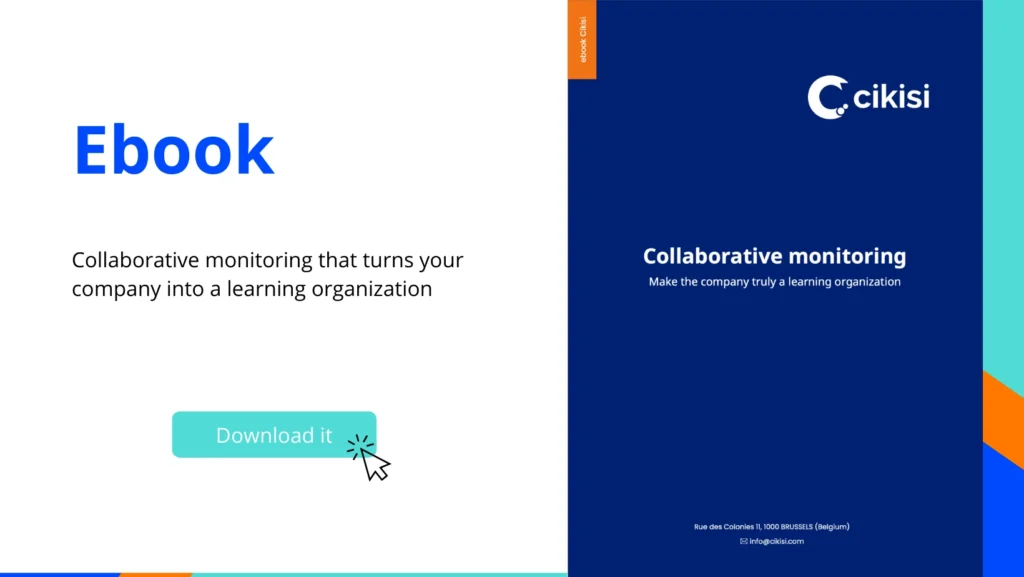
The most successful companies are those that learn continuously. In an increasingly complex environment, knowing how to pick up the right signals, share them and turn them into decisions is a major strategic advantage. This is precisely Cikisi‘s mission. By combining automated monitoring, team collaboration and artificial intelligence, Cikisi helps companies structure their information and develop truly actionable collective intelligence. Thanks to a platform designed for business use and tools such as Ask Mila, monitoring becomes a daily reflex, integrated into the company’s decisions and tools.
Want to move from accumulating information to a truly dynamic learning organization?
Find out how Cikisi can help you set up effective and sustainable collaborative monitoring.

 Book a demo